
 Pin It
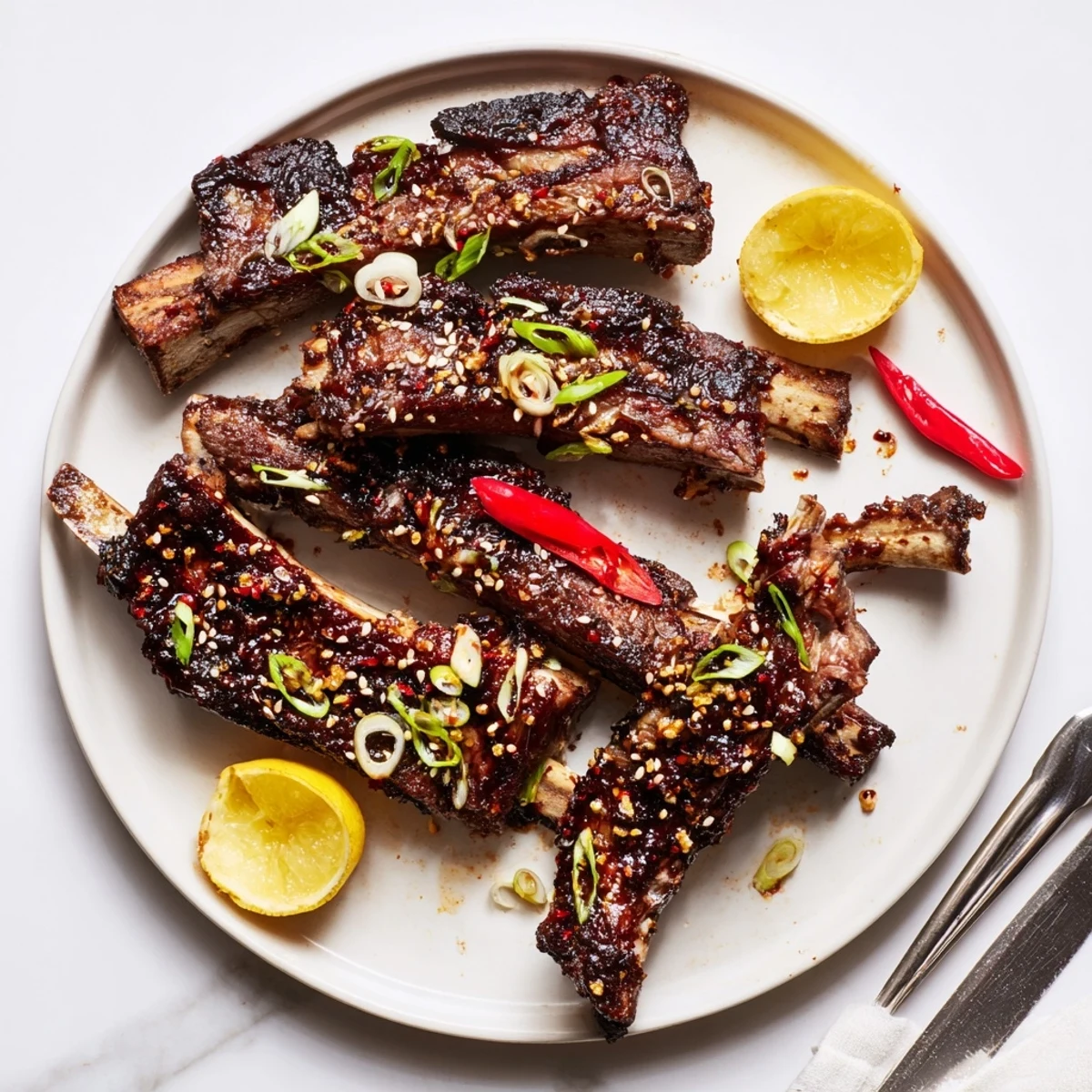
 These Korean BBQ lamb ribs bring together bold gochujang marinade with tender, slow-roasted meat that caramelizes beautifully in the oven. The marinade combines Korean chili paste, soy sauce, sesame oil, garlic, and ginger for deep umami flavor.
After a low-and-slow roast at 160°C, the ribs get glazed with a honey-thickened sauce and finished at high heat for irresistible char. A generous squeeze of yuzu juice adds a fragrant citrus brightness that cuts through the richness.
Garnished with scallions, sesame seeds, and sliced chili, this fusion main course pairs perfectly with steamed rice and pickled vegetables. Allow at least 4 hours marination time for best results.
The sizzle of lamb ribs hitting a hot pan on a rainy Tuesday evening taught me more about Korean fusion cooking than any cookbook ever could. I had grabbed a jar of gochujang on impulse at the local Asian market, drawn in by its deep red color and the promise of heat that builds slowly. That jar sat in my fridge for a week before I finally decided to pair it with a rack of lamb ribs I had defrosted by accident. What followed was the kind of kitchen accident that changes your weeknight dinner plans permanently.
I made these for my neighbor Dave last summer when he helped me fix a leaking sink for the third time. He stood in the kitchen watching me brush glaze onto the ribs and admitted he had never eaten lamb willingly in his life. Two racks later he was asking where to buy yuzu juice and whether gochujang came in larger jars.
Ingredients
- Lamb ribs (1.5 kg, trimmed): Ask your butcher to trim them if possible, since excess fat can cause flareups and mask the marinade flavor you worked so hard to build.
- Gochujang (3 tbsp): This fermented Korean chili paste is the backbone of the marinade, so spring for a good quality tub and keep it in your fridge for everything from stir fries to dipping sauces.
- Soy sauce (4 tbsp): Use a gluten free tamari if needed, and opt for a naturally brewed bottle because the deeper umami really does make a noticeable difference here.
- Brown sugar (2 tbsp): Helps the marinade caramelize under high heat, and balances the fierce warmth of the gochujang without making things sweet.
- Sesame oil (1 tbsp): Toasted sesame oil adds a nutty aroma that ties the whole Korean flavor profile together, so do not skip it or substitute with a neutral oil.
- Garlic (4 cloves, minced): Fresh garlic only, since the pre minced jarred version lacks the sharp punch this marinade relies on to cut through the richness of lamb.
- Fresh ginger (2 tsp, grated): Grate it directly into the bowl using a microplane so the juices and fibers all go in together.
- Rice vinegar (1 tbsp): Adds a subtle tang that brightens the marinade and tenderizes the meat simultaneously.
- Mirin (2 tbsp, optional): If you have it, this sweet cooking wine rounds out the edges and gives the glaze a beautiful sheen.
- Black pepper (1 tsp, ground): Freshly cracked is always better, especially when it will be competing with such bold flavors.
- Honey (2 tbsp): Mixed into the reserved marinade to create a glaze that thickens and lacquers the ribs in those final minutes.
- Yuzu juice (2 tbsp): This Japanese citrus is floral and tart in a way lemon can only approximate, though lemon will work in a pinch if that is what you have.
- Toasted sesame seeds (1 tbsp): Sprinkle these on at the very end for a gentle crunch and visual finish that signals you meant business.
- Scallions (2, thinly sliced): Their mild onion bite cuts through the richness and adds a fresh green contrast to the deep red glaze.
- Red chili (1 small, sliced, optional): For those who want an extra kick and a pop of color on the plate.
Instructions
- Build the marinade:
- Whisk together the gochujang, soy sauce, brown sugar, sesame oil, garlic, ginger, rice vinegar, mirin if you are using it, and black pepper in a large bowl until you have a smooth, glossy paste that smells deeply savory with a faint sweet undertone.
- Coat the ribs:
- Slide the lamb ribs into a large resealable bag or a shallow dish, pour the marinade over them, and use your hands to massage it into every surface and crevice so nothing is left bare.
- Let time do its work:
- Seal the bag or cover the dish and let it rest in the refrigerator for at least 4 hours, though overnight is where the real magic happens as the flavors penetrate deeply into the meat.
- Set up the roast:
- Preheat your oven to 160 degrees Celsius (320 degrees Fahrenheit), pull the ribs from the fridge, and shake off the excess marinade into a small saucepan to save for the glaze before arranging the ribs on a wire rack set over a baking sheet and tenting them loosely with foil.
- Slow roast to tenderness:
- Roast the covered ribs for one full hour while you gently simmer the reserved marinade with the honey in a small saucepan over low heat for about 5 minutes until it thickens into a rich, sticky glaze.
- Caramelize and char:
- Crank the oven up to 200 degrees Celsius (400 degrees Fahrenheit), remove the foil, and brush the ribs generously with your glaze before returning them uncovered for 10 to 15 minutes until the edges caramelize and you get those beautiful dark sticky patches.
- Finish with yuzu:
- Pull the ribs from the oven, let them rest for 5 minutes so the juices settle, then squeeze the yuzu juice generously over the top so it pools in the crevices and mingles with the glaze.
- Garnish and serve:
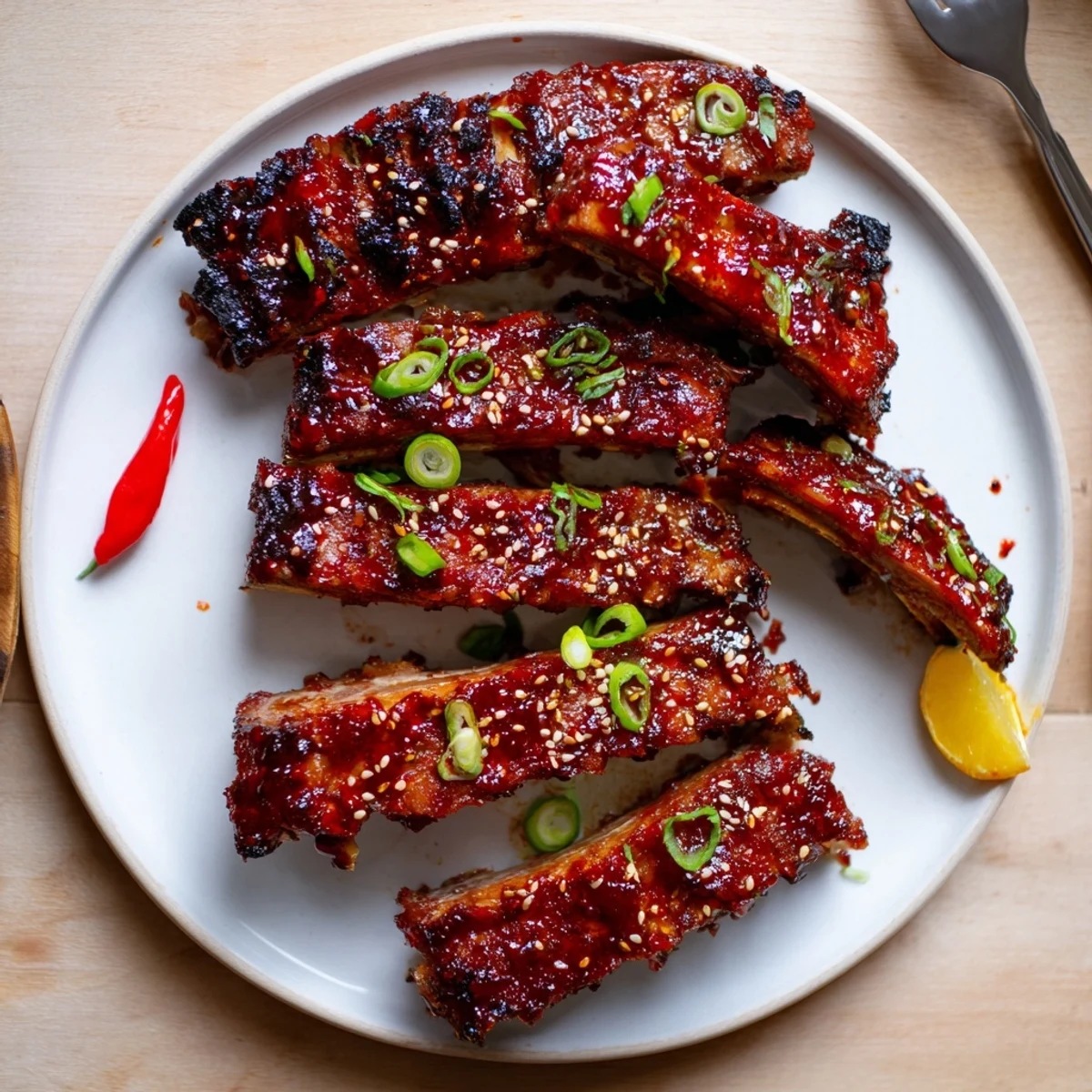
- Scatter the sliced scallions, toasted sesame seeds, and red chili if using across the ribs and bring them to the table on the rack or transfer to a platter while they are still hot and glistening.
 Pin It
 The second time I made these ribs was for a small backyard gathering where everyone ended up standing around the grill instead of sitting at the table, picking ribs up with their fingers and forgetting about napkins entirely.
What to Serve Alongside
Steamed white rice is the obvious companion because it soaks up the sweet spicy glaze that drips off the ribs, but a simple plate of pickled radishes or quick cucumber kimchi cuts through the richness in a way that keeps you reaching for more. I once served these alongside cold sesame noodles on a hot August evening and that pairing has become a regular request in my house.
Adjusting the Heat
Three tablespoons of gochujang gives you a moderate warmth that most people can enjoy, but the beauty of this recipe is how easily it adapts. If you are cooking for someone who fears spice, dial it back to one and a half tablespoons and let the sesame and soy flavors carry the dish instead.
Grilling Instead of Roasting
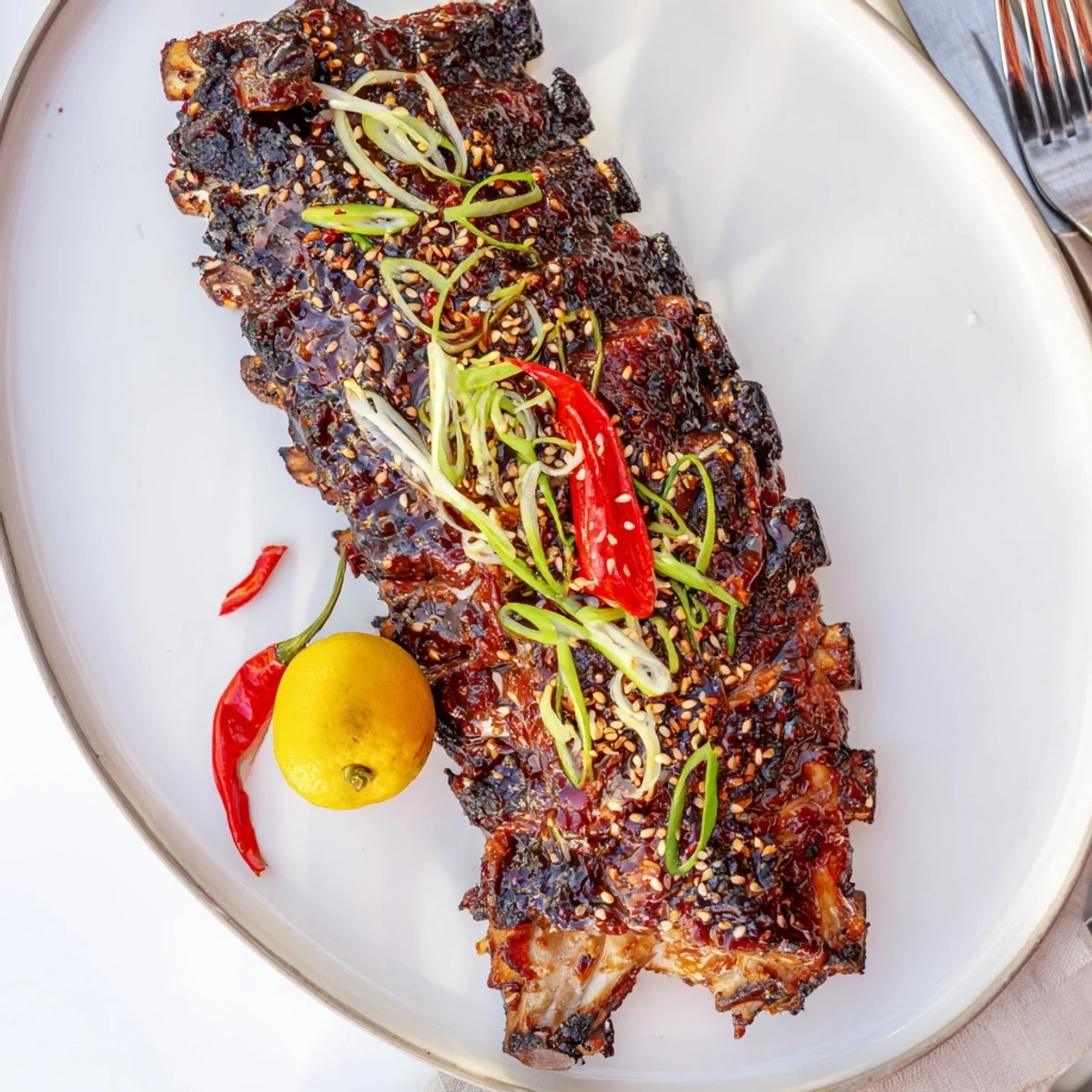
If you have access to an outdoor grill, finish the ribs over direct high heat for two or three minutes per side after their initial oven roasting to get a smoky char that the oven alone cannot replicate. The grill marks add visual drama and a subtle smoke flavor that plays beautifully with the yuzu finish.
- Oil the grill grates well because the honey glaze will stick and burn if you are not careful.
- Keep a spray bottle of water nearby for any flareups from the lamb fat.
- Move the ribs frequently during those final minutes so the sugar caramelizes without turning to ash.
 Pin It
 Some recipes become staples because they are easy, and others earn their spot because they make people close their eyes when they take the first bite. These ribs have done both in my kitchen, and I suspect they will in yours too.
Recipe FAQs
- → Where can I find yuzu juice?
-
Yuzu juice is available at Asian specialty stores and some well-stocked supermarkets. If unavailable, fresh lemon juice works as a substitute, though the flavor profile will be less floral and aromatic.
- → Can I grill these lamb ribs instead of roasting?
-
Yes. For best results, roast the ribs first at 160°C for about an hour to ensure tenderness, then finish on a hot grill for 2 to 3 minutes per side to develop extra char and smoky flavor.
- → How long should I marinate the lamb ribs?
-
Minimum marination time is 4 hours, but overnight in the refrigerator yields the most flavorful and tender results. The gochujang and soy sauce penetrate deeper given more time.
- → Is this dish gluten-free?
-
It can be. Use gluten-free soy sauce and verify that your gochujang brand is certified gluten-free, as some contain wheat. Check all condiment labels carefully.
- → What should I serve with Korean BBQ lamb ribs?
-
Steamed white rice and pickled vegetables make excellent accompaniments. A simple cucumber salad or kimchi also complements the bold, sweet-savory flavors of the ribs beautifully.
- → How spicy are these lamb ribs?
-
The heat level depends on the amount of gochujang used. The default measurement provides moderate warmth. Reduce or increase the chili paste to suit your preference.