
 Pin It
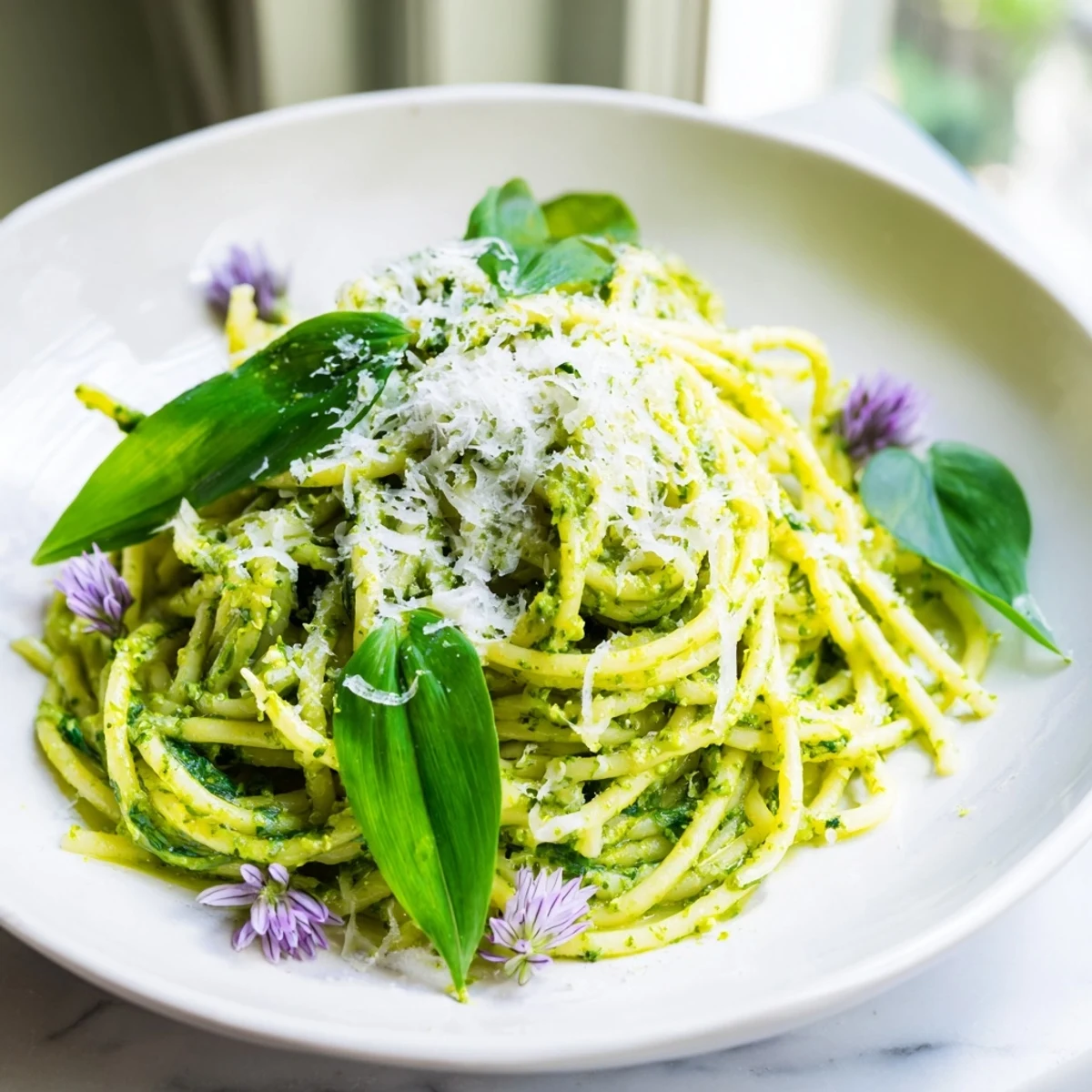
 This wild garlic pesto pasta brings together the bold, aromatic flavor of fresh wild garlic leaves with toasted pine nuts, Parmesan cheese and quality olive oil.
Ready in just 25 minutes, it's an effortless yet impressive dish that captures the essence of spring on a plate.
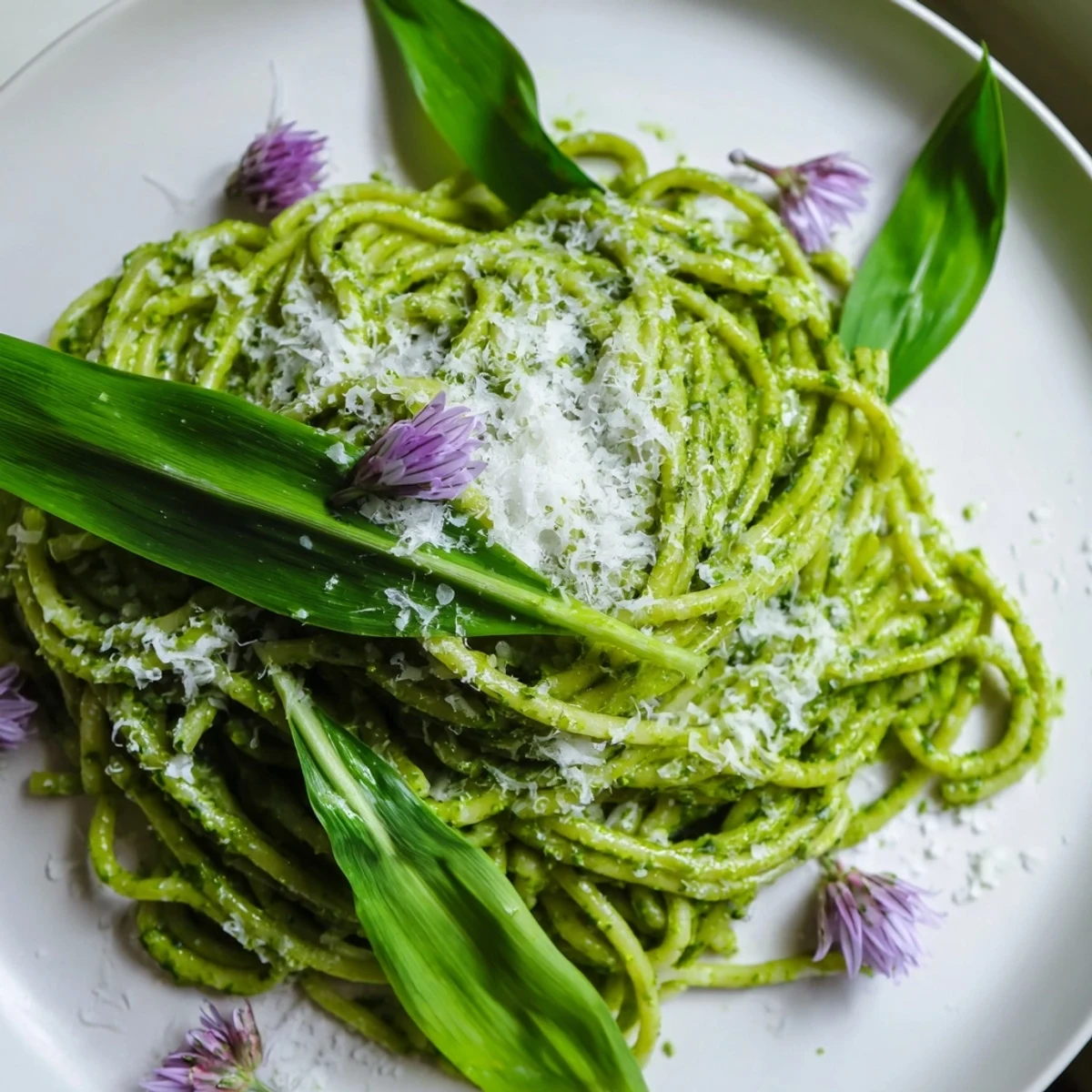
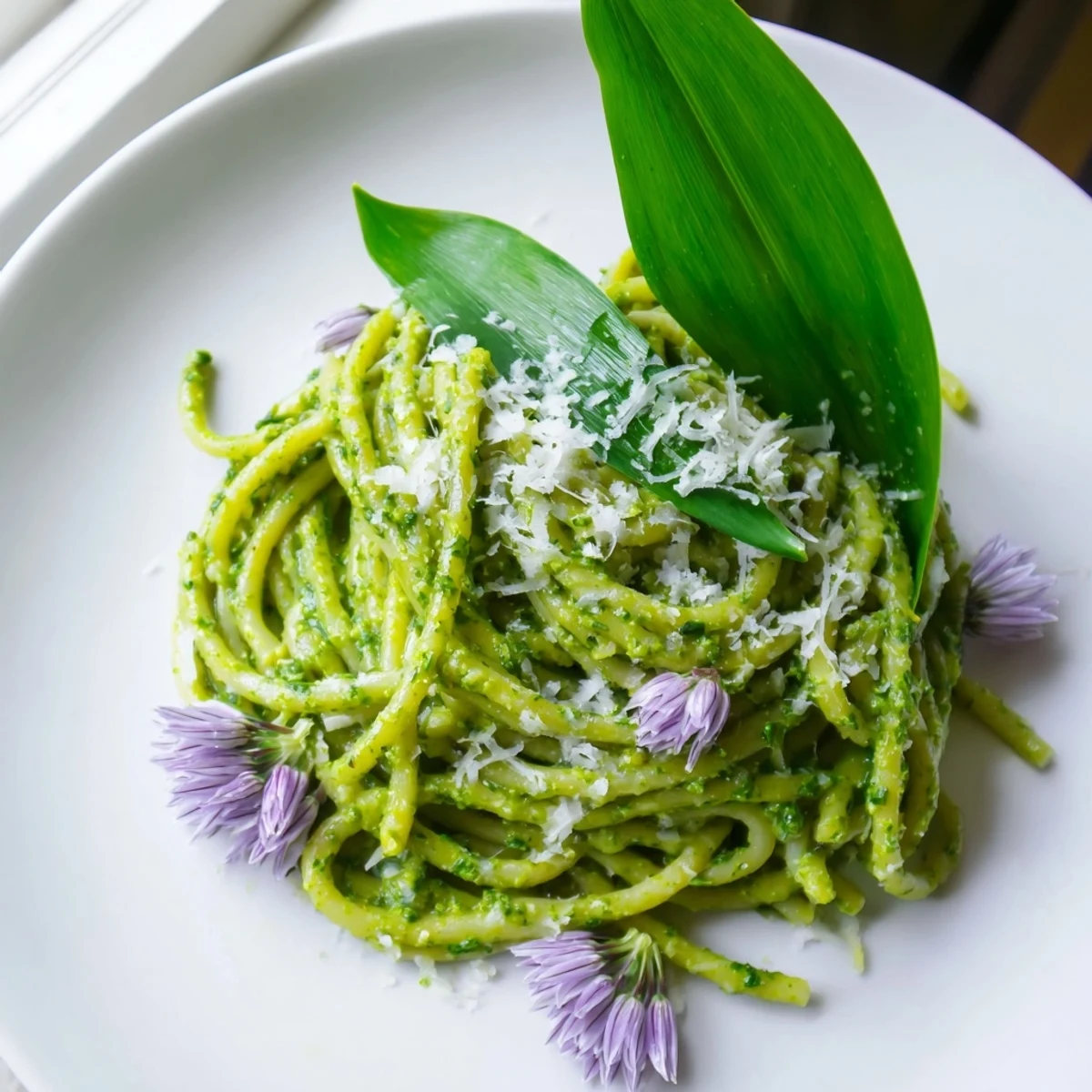
Tossed al dente with a splash of pasta water for a silky, glossy finish, each serving is garnished with extra Parmesan and edible flowers for a restaurant-worthy presentation.
There is a narrow window in spring when wild garlic appears along the damp edges of woodland paths, and if you are lucky enough to catch it, the smell hits you before you even see the leaves. My neighbor Clara once stuffed an entire tote bag full of the stuff and left a bundle on my doorstep with nothing but a sticky note that read make something good. That is exactly what this pasta is, something good made from almost nothing.
I have made this on weeknights when the fridge was bare and on lazy Sunday afternoons when the sun came through the kitchen window and a glass of Pinot Grigio was already in hand. Friends who claimed they did not like pesto changed their minds at my table over a bowl of this. It is the dish I reach for when I want dinner to feel like a small celebration without any of the work.
Ingredients
- 400 g dried pasta (spaghetti or linguine): Long strands hold the pesto beautifully, but honestly any shape you have will cooperate.
- 1 tbsp salt (for pasta water): This is not optional, the pasta needs to be seasoned from the inside out.
- 80 g wild garlic leaves: Wash them thoroughly since they grow low to the ground and collect grit.
- 30 g pine nuts (or walnuts): Pine nuts give a buttery sweetness, walnuts add an earthy depth, both are correct.
- 50 g grated Parmesan cheese: Grate it yourself from a block for the best texture and melting behavior.
- 80 ml extra virgin olive oil: Use the good stuff here, it is a raw sauce and you will taste every drop.
- 1 small garlic clove (optional): Wild garlic is already garlicky, so add this only if you want an extra punch.
- 1/2 lemon, juiced: A squeeze of acid lifts everything and keeps the brilliant green from oxidizing.
- Salt and freshly ground black pepper: Season the pesto to taste, starting conservatively since Parmesan is already salty.
- Extra Parmesan and wild garlic leaves or edible flowers (for garnish): A finishing flourish that makes a simple bowl feel restaurant worthy.
Instructions
- Get your pasta water going:
- Bring a large pot of generously salted water to a rolling boil and cook the pasta according to the package until it has just the slightest bite left. Before you drain it, scoop out half a cup of that starchy water and set it aside, it is liquid gold for your sauce.
- Whirl the pesto together:
- Drop the wild garlic leaves, pine nuts, Parmesan, olive oil, garlic clove if you are using it, lemon juice, salt, and pepper into a food processor. Blend until smooth, stopping to scrape down the sides once or twice, then taste and trust your own judgment on seasoning.
- Marry the pasta and pesto:
- Drain the pasta and dump it straight back into the warm pot, then spoon the pesto over it and toss vigorously. Splash in a little of that reserved pasta water until the sauce turns silky and clings to every strand like it was meant to be there.
- Plate and finish:
- Divide among bowls immediately while it is hot, shower with extra Parmesan, and scatter a few wild garlic leaves or edible flowers on top if the mood strikes you.
 Pin It
 The first time I served this to my friend Marco, who grew up near Genoa where pesto was practically invented, he went quiet after the first bite and I panicked. Then he asked for seconds, and I understood that sometimes the simplest thing on the table is the one that speaks loudest.
Making It Your Own
This recipe bends easily in whatever direction your pantry or dietary needs suggest. Swap in nutritional yeast for the Parmesan and you have a vegan dinner that loses none of its charm. Sunflower seeds, almonds, or even pistachios work in place of pine nuts, each one nudging the flavor in a slightly different direction.
What to Serve Alongside
A glass of something crisp and white, like Pinot Grigio or a dry Verdicchio, is really all you need beside this bowl. A simple green salad with a sharp vinaigrette cuts through the richness nicely if you want to stretch the meal further.
Tools That Make It Easy
You do not need much to pull this off, which is part of the beauty, but a reliable food processor or blender is the one nonnegotiable tool that turns five minutes of raw ingredients into a smooth, vivid sauce. Everything else is just a pot, a colander, and basic utensils you already have.
- A large pot with plenty of room keeps the pasta from sticking together.
- A colander set in the sink makes draining quick and painless.
- A food processor or blender is your best friend here, do not try to chop this by hand.
 Pin It
 Every spring I wait for that narrow window when the woods smell like garlic, and every spring this pasta ends up on my table at least a handful of times. It is the kind of recipe that reminds you how little you actually need to make something wonderful.
Recipe FAQs
- → Where can I find wild garlic?
-
Wild garlic, also known as ramsons, grows abundantly in woodland areas during spring. You can forage it from March to June in damp, shaded areas. Alternatively, check farmers' markets, specialty grocers, or Asian markets where it may be sold as garlic chives.
- → Can I make the pesto ahead of time?
-
Yes, the pesto can be prepared up to 3 days in advance and stored in an airtight container in the refrigerator. Pour a thin layer of olive oil on top to prevent discoloration. You can also freeze it for up to 3 months in ice cube trays for portioned convenience.
- → What pasta shapes work best with this pesto?
-
Long strands like spaghetti, linguine or tagliatelle work beautifully as the pesto coats them evenly. Short shapes like fusilli, penne or orecchiette are also excellent since the pesto gets trapped in their crevices, delivering more flavor in each bite.
- → How do I prevent the pesto from turning brown?
-
The lemon juice in this pesto helps preserve the bright green color. Blending briefly rather than over-processing also helps. If making ahead, press plastic wrap directly onto the surface of the pesto and store it in the refrigerator with a layer of olive oil on top.
- → Is there a nut-free alternative for pine nuts?
-
Sunflower seeds make an excellent nut-free substitute and provide a similar creamy texture. Toasted pumpkin seeds also work well. For a creamier consistency without nuts, try using a tablespoon of nutritional yeast along with sunflower seeds.
- → Can I add protein to make this more filling?
-
Absolutely. Grilled chicken, pan-seared shrimp, or crispy pancetta all pair wonderfully with the wild garlic pesto. For a vegetarian protein boost, try adding white beans, roasted cherry tomatoes with mozzarella, or a poached egg on top.