
 Pin It
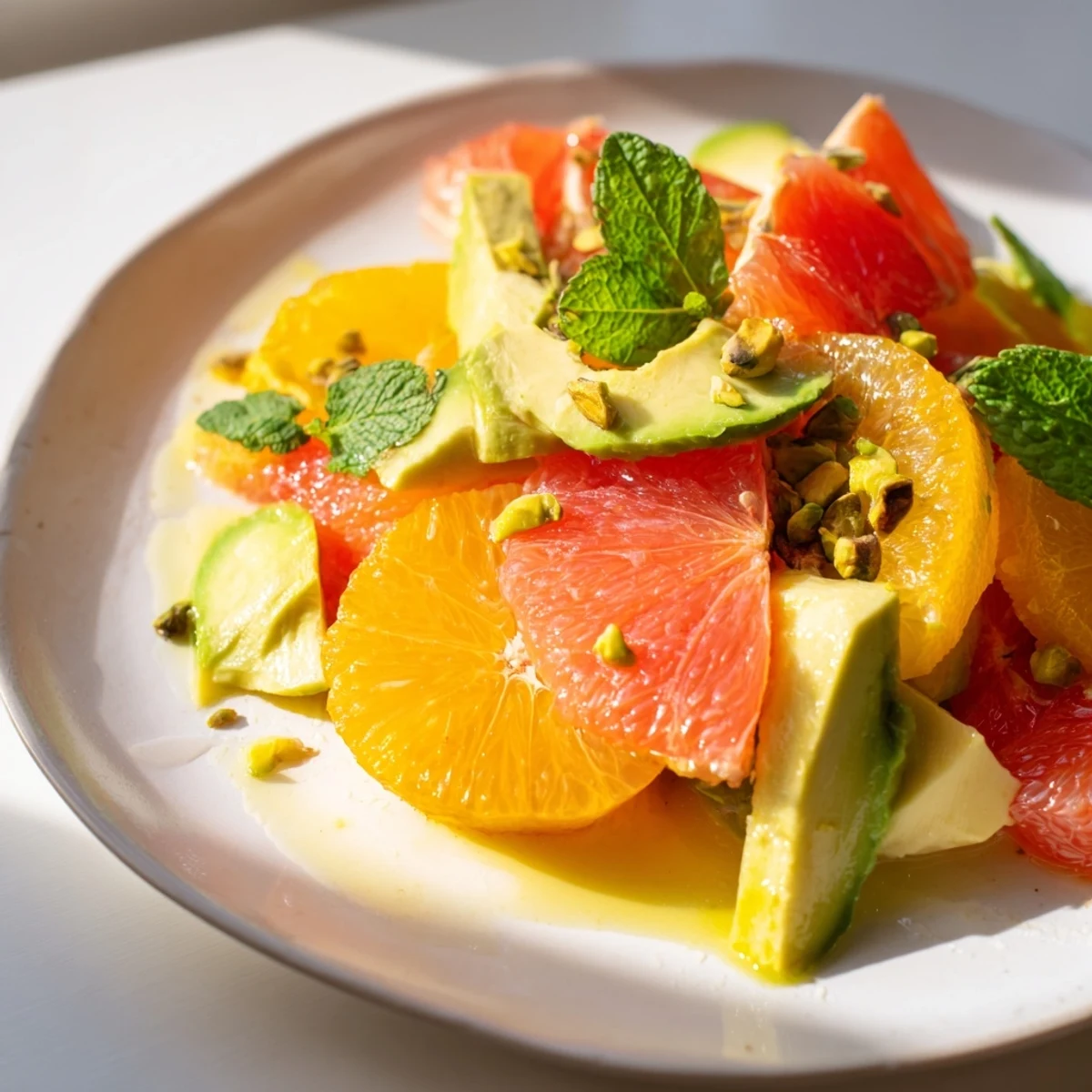
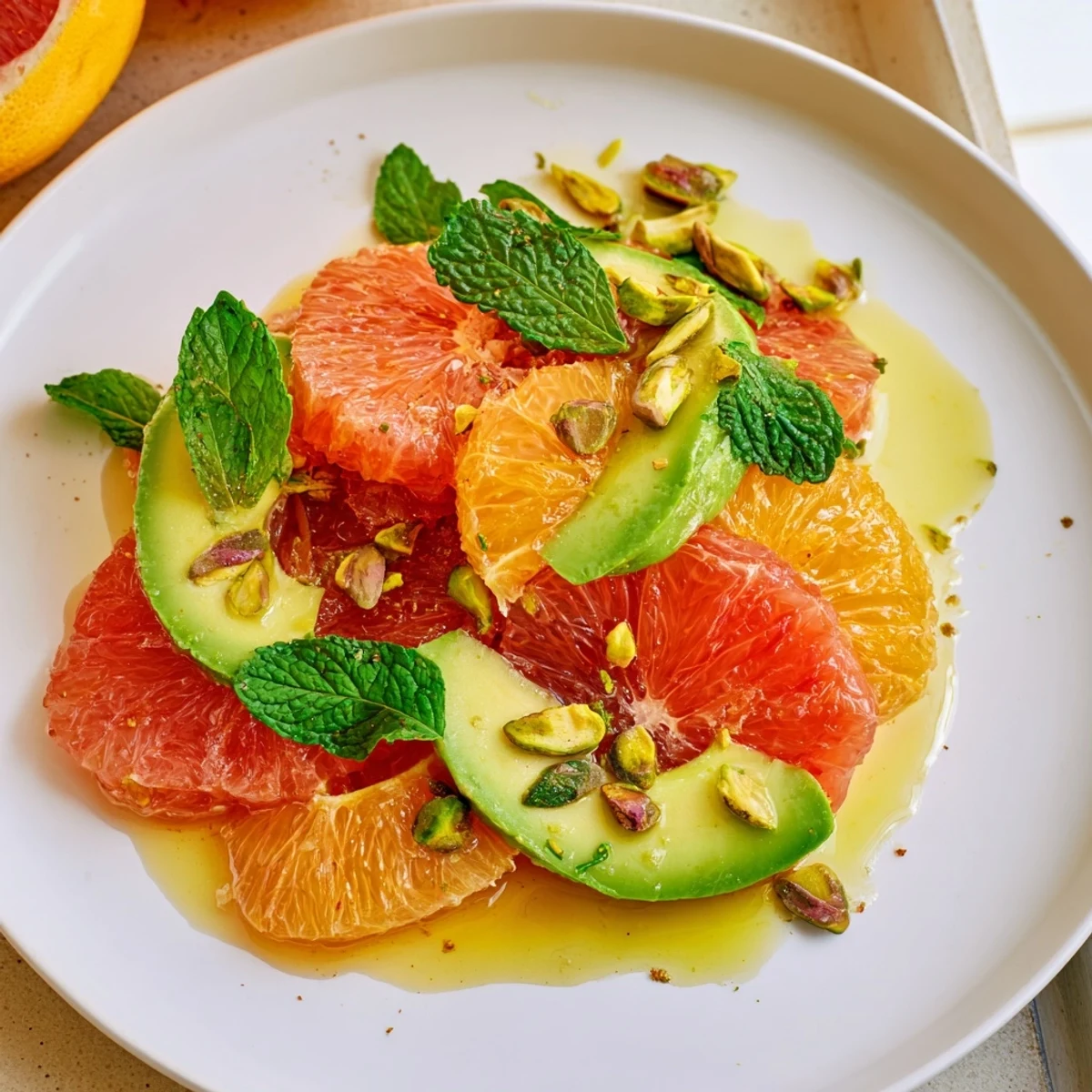
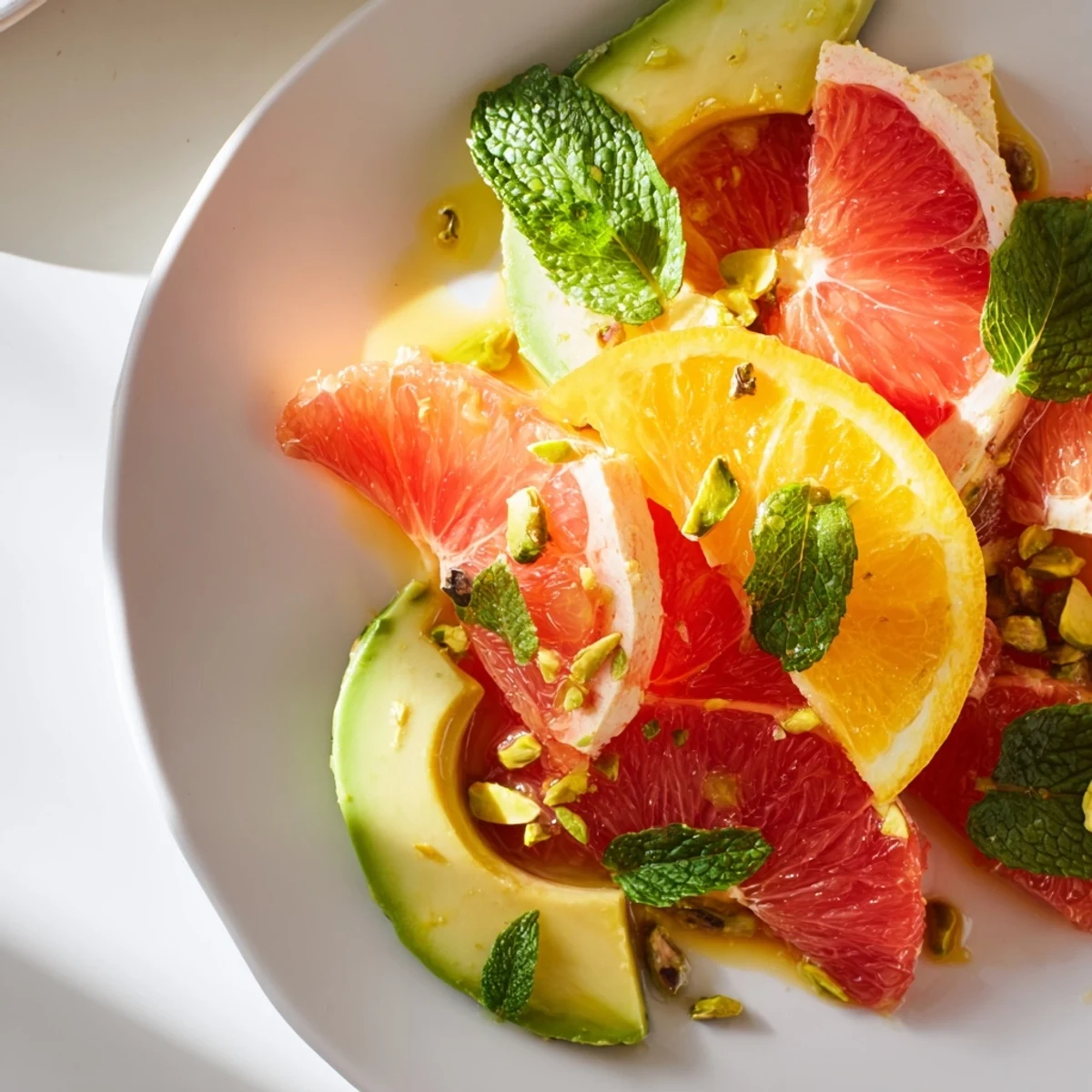
 This winter citrus salad combines the bright, juicy flavors of oranges, blood oranges, and grapefruit with creamy avocado slices and fresh mint leaves. The dressing of olive oil, lemon juice, honey, and Dijon mustard adds a balanced tang and subtle sweetness. Toasted pistachios or almonds provide a crunchy garnish, enhancing the texture and flavor. Quick and easy to assemble, this dish is a refreshing option for colder days and pairs well with grilled proteins.
There's something about January that makes me crave brightness, and this salad arrived on my counter almost by accident—a handful of pomelos from the farmer's market and a couple of avocados that were perfectly ripe that exact morning. I'd been staring out the window at gray skies, and suddenly I was arranging citrus like I was painting, mint leaves catching the light, and somehow my kitchen smelled like spring. It became my favorite way to reset after holiday cooking.
I made this for a dinner party once where someone had mentioned feeling tired of heavy food, and watching their face when they took that first bite—suddenly tasting mint and citrus and something silky all at once—reminded me why simple food cooked with attention matters so much more than elaborate.
Ingredients
- Oranges and blood oranges: The regular ones are sweet and juicy, but blood oranges bring this unexpected berry undertone that makes people pause mid-bite and ask what they're tasting.
- Grapefruit: This is the one that keeps everything honest, cutting through the sweetness with enough tartness to make you feel awake.
- Ripe avocados: They should yield to gentle thumb pressure, never mushy—this is the one thing that makes or breaks it.
- Fresh mint: Torn by hand rather than chopped, so the leaves stay tender and don't bruise into a dark, bitter mess.
- Extra-virgin olive oil: The good kind you actually taste, not the neutral oil.
- Lemon juice and honey: The honey dissolves into the oil and rounds out everything; the lemon keeps it from becoming too sweet.
- Dijon mustard: Just a teaspoon, but it adds a little backbone that pulls all the flavors into focus.
- Pistachios or almonds: Toasted so they're crisp and golden, they add a small texture surprise that feels luxurious.
Instructions
- Prep your citrus:
- Peel each orange, blood orange, and grapefruit completely, removing all the white pith so you're left with just the jewel-like fruit. Slice into rounds or segments and lay them out on your platter like you're arranging something beautiful—they'll stay warm and can sit there while you finish the rest.
- Fan out the avocado:
- Slice your ripe avocado lengthwise, remove the pit, and scoop each half into thin, even slices, then fan them across the citrus. If your avocado seems like it'll oxidize quickly, do this step last, right before serving.
- Scatter the mint:
- Tear mint leaves with your fingers so they stay tender and don't bruise, then distribute them across the whole platter. The oils on your hands will release the mint's perfume, and you'll know immediately if it smells fresh.
- Make your dressing:
- In a small bowl, combine olive oil, lemon juice, honey, and mustard, then whisk until it looks emulsified and slightly creamy. Taste it with a clean spoon and adjust salt and pepper until it makes you want to keep tasting it.
- Bring it together:
- Drizzle the dressing over the whole salad in a thin, even stream, then top with toasted nuts if you're using them. Serve immediately while everything is still cold and the citrus is at its peak.
 Pin It
 There's a quiet moment right after you finish arranging this salad, when you step back and see all that color and fresh herb scattered across the platter, and you realize you didn't really cook anything—you just arranged things with care, and somehow that's enough.
Citrus Selection and Sourcing
Winter is the only time citrus truly sings, and I've learned to buy what looks best at the market rather than sticking to the recipe exactly. Cara cara oranges have this surprising raspberry note, tangerines are sweeter and smaller, and grapefruit varies wildly depending on where it comes from and how long it's been sitting. The mix matters less than using fruit that actually looks vibrant and feels heavy in your hand. One winter I used three kinds of grapefruit and didn't even add oranges, and it was better than the traditional version.
Building Layers and Flavor
The order of assembly does matter, even though it seems simple. The citrus goes down first because it's sturdy and creates a flavor foundation, then the avocado softens everything with its richness, and the mint arrives last so it stays bright rather than wilting into the warmth. The dressing needs to be just sharp enough—I learned this when I made one with too much honey and it tasted like dessert, and now I always taste it twice before it touches the platter. If you're serving this with other food, let it be the fresh thing on the table; it doesn't compete well with heavy flavors.
Variations and Flexibility
This salad taught me that the best recipes are the ones you can actually make with what you have. If you don't have mint, basil works in a pinch and adds an Italian bent. If nuts are an allergen, the salad is still perfect without them—the crispness comes from the citrus. Some days I add a small handful of pomegranate seeds if I see them, or shaved fennel if I'm feeling fancy and have time to slice it thin.
- Swap in any seasonal citrus available to you; the blend matters more than the exact varieties.
- If you can't find ripe avocados, defer the salad or skip them entirely rather than using hard ones.
- Make the dressing ahead of time, but assemble everything else right before serving so avocado and mint stay perfect.
 Pin It
 This salad became the thing I reach for when I need to remember that eating well doesn't require hours in the kitchen—just good ingredients and a few minutes of attention. It's bright enough to carry you through the gray months, simple enough to make on an ordinary Tuesday, and generous enough to share.
Recipe FAQs
- → What types of citrus work best in this salad?
-
Oranges, blood oranges, and grapefruit provide a vibrant, juicy contrast that brightens the salad's flavors. Seasonal citrus like tangerines or cara cara oranges can also be used.
- → Can I substitute the nuts in this dish?
-
Yes, toasted pistachios or sliced almonds add crunch, but if you prefer nut-free, pumpkin seeds are a great alternative.
- → How should the dressing be prepared?
-
Whisk together olive oil, fresh lemon juice, honey or maple syrup, Dijon mustard, salt, and pepper until emulsified before drizzling over the salad.
- → Is this salad suitable for special diets?
-
It's naturally gluten-free, dairy-free, vegan, and egg-free, making it a versatile dish for various diet preferences.
- → What dishes pair well with this salad?
-
This citrus avocado salad complements grilled fish or roast chicken beautifully, adding a fresh contrast to rich mains.