
 Pin It
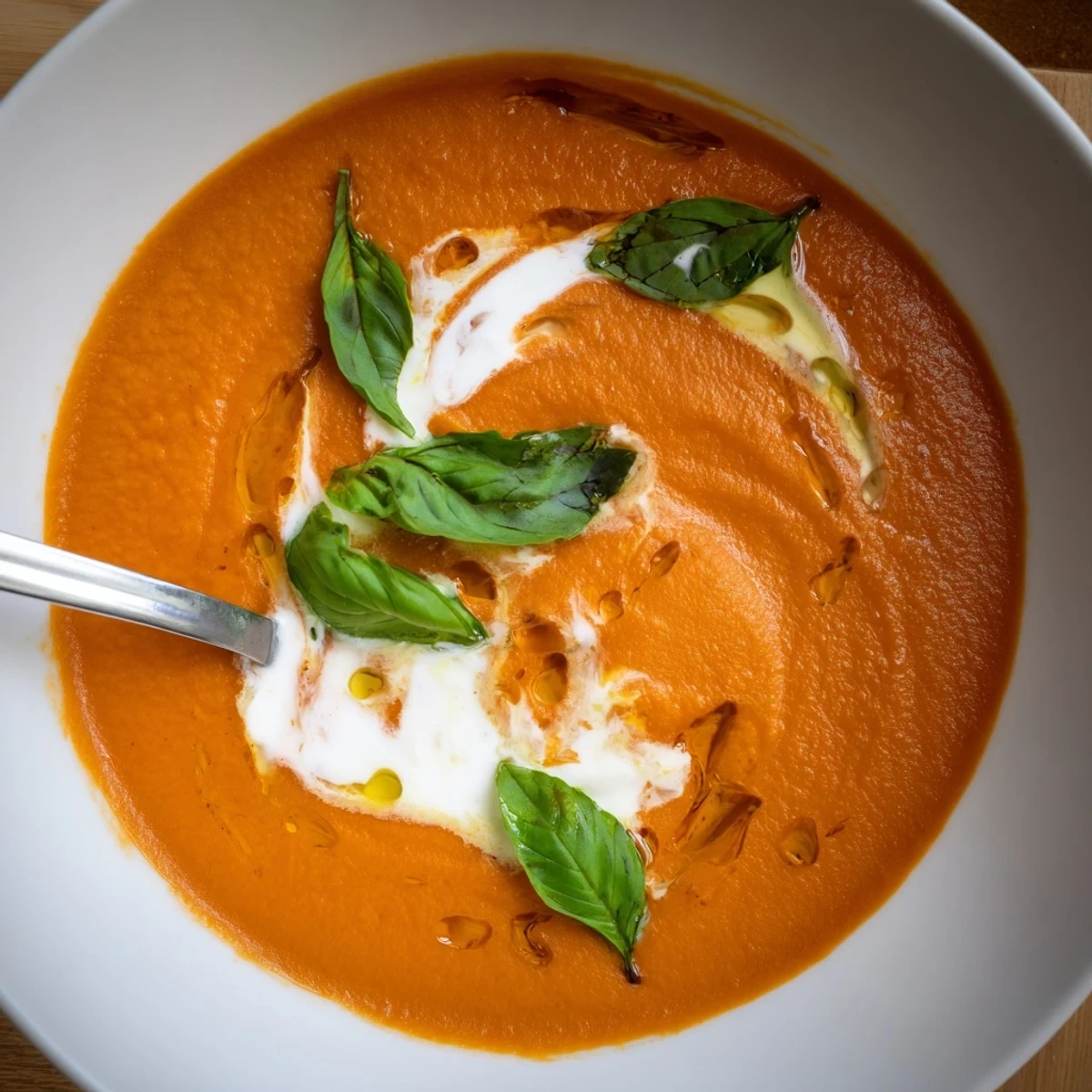
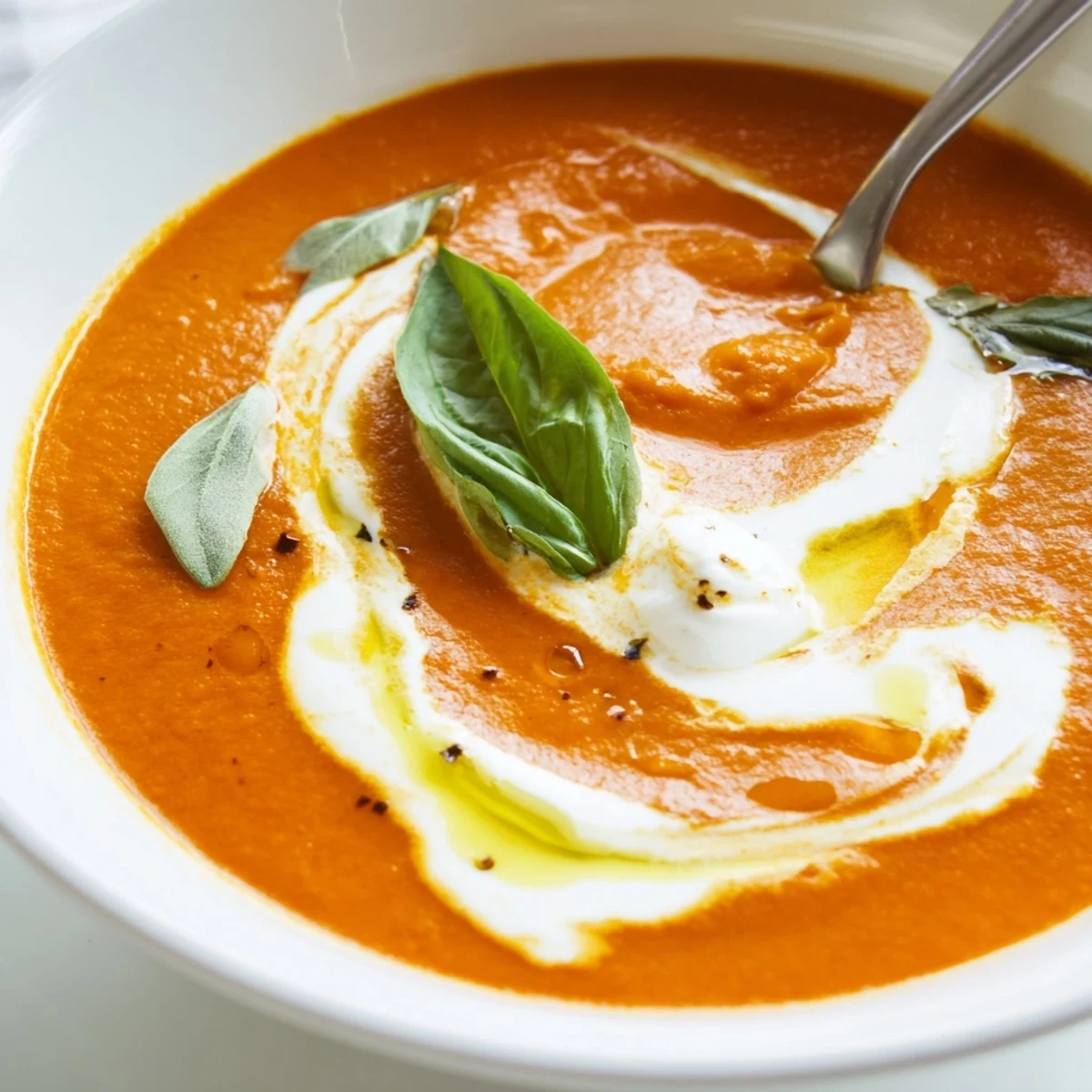
 This vibrant and comforting soup highlights deep smoky flavors from slow-roasted tomatoes combined with fresh basil for brightness. Caramelized onions, garlic, and red bell pepper add richness, while a touch of cream adds smoothness. Perfect for a light meal or starter, this dish balances smoky, fresh, and creamy elements harmoniously. Roasting the vegetables brings out natural sweetness and complexity, while basil adds a fresh herbaceous note. A splash of balsamic vinegar brightens the overall taste, making it a well-rounded, satisfying experience.
There's something almost meditative about roasting tomatoes until their edges blacken and char—it's like watching them transform into something richer, deeper than their raw selves. I first made this soup on a gray October afternoon when I had too many tomatoes from the market and a vague craving for something that tasted like autumn, even though we were weeks away. The oven did the heavy lifting while I sat at the kitchen table, and by the time that smoky-sweet smell began seeping through the house, I knew I was onto something special.
I made this for my sister the first time it snowed that year, and she sat at my kitchen counter with a bowl of it, just silent for a moment, before saying it tasted like the best version of tomato soup she'd ever had. That's when I knew it wasn't just about the smoke or the cream—it was about taking time to let the tomatoes speak for themselves.
Ingredients
- Ripe tomatoes, 1.5 kg, halved: Choose tomatoes that feel heavy for their size and smell sweet at the stem end; the roasting will concentrate their flavor, so starting with good ones makes all the difference.
- Large onion, 1, quartered: Quartering rather than dicing keeps the pieces sturdy enough to caramelize without falling apart.
- Garlic cloves, 4, unpeeled: Roasting garlic unpeeled keeps it sweet and mellow instead of harsh; peel it after roasting when it squishes out easily.
- Red bell pepper, 1, seeded and quartered: This adds subtle sweetness and body without overpowering the tomato, and the deep red varieties have more flavor than the standard ones.
- Olive oil, 2 tbsp: Good olive oil matters here since it's not cooked into obscurity; it becomes part of the flavor profile.
- Smoked paprika, 1 tsp: This is what gives the soup that campfire-like depth; don't skip it or substitute regular paprika.
- Ground black pepper, 1/2 tsp: Freshly ground is non-negotiable for the cleaner bite.
- Sea salt, 1 tsp: Add this gradually during cooking rather than all at once, since roasting concentrates flavors.
- Vegetable broth, 3 cups (720 ml): Low-sodium broth lets the tomatoes take center stage; you can always add salt but you can't undo it.
- Balsamic vinegar, 1 tsp: Just enough to round out the sweetness and add a subtle tang that makes people wonder what the secret ingredient is.
- Fresh basil leaves, 1 cup (25 g) packed, plus extra for garnish: Add this after blending so the flavor stays bright and alive instead of becoming muddy.
- Heavy cream or coconut cream, 1/4 cup (60 ml), optional: Even a small amount softens the soup's edges and makes it feel luxurious; coconut cream works beautifully if you're keeping things dairy-free.
Instructions
- Fire up the oven and get your vegetables ready:
- Preheat to 220°C (425°F) and arrange your halved tomatoes cut-side up on a baking sheet along with the onion quarters, unpeeled garlic, and bell pepper pieces. Drizzle everything with olive oil, then scatter smoked paprika, salt, and pepper over top like you're seasoning the whole lot at once.
- Let the heat do the work:
- Roast for 35–40 minutes until the tomato edges are darkened and the flesh has softened into itself. Turn the bell pepper halfway through so it caramelizes evenly; you'll know it's ready when the skin is blistered and starting to char at the edges.
- Cool and combine:
- Pull everything from the oven and let it rest for a few minutes. Peel the garlic cloves—they'll slide right out of their skins—then transfer all the roasted vegetables and every bit of their caramelized juice into a large pot.
- Build your broth:
- Add the vegetable broth and balsamic vinegar, then bring everything to a simmer over medium heat. Let it bubble gently for about 10 minutes so the flavors get acquainted.
- Blend until silky:
- Stir in the fresh basil leaves and blend everything until smooth using an immersion blender (my preferred method) or in batches in a countertop blender if you don't have one. If you're using a countertop blender, be careful with hot soup and let a little steam escape between batches.
- Finish with cream and seasoning:
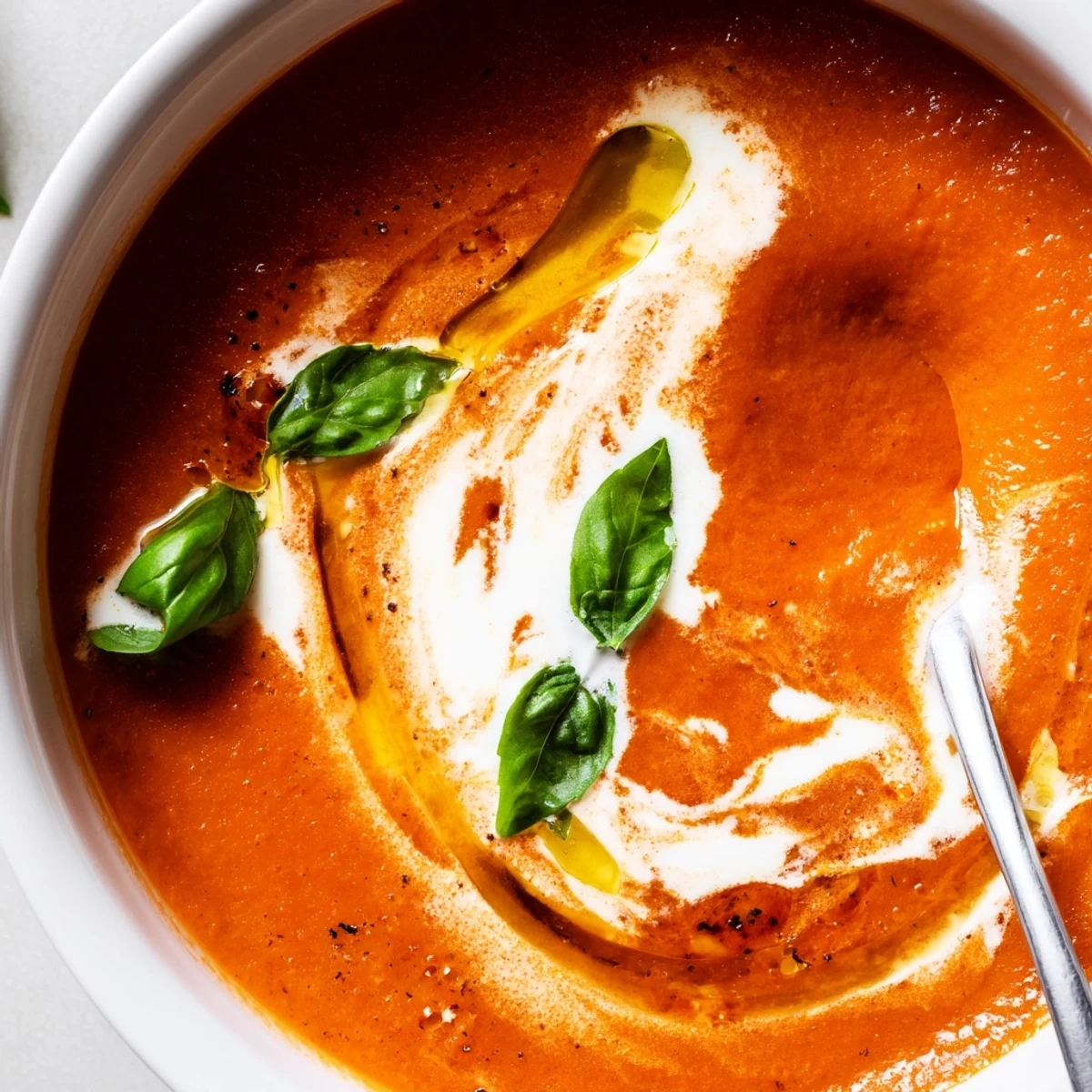
- Stir in the cream if you're using it, then taste and adjust with salt and pepper. Remember that the roasted flavors can be quite bold, so you often need less salt than you'd expect.
- Serve with intention:
- Ladle the soup into bowls while it's still steaming, tear a few fresh basil leaves over top, and finish with a thin thread of good olive oil. It's the last touch that makes it feel like something special.
 Pin It
 What I love most about making this soup is that moment after blending, when you take a spoon and taste it straight from the pot before adding the cream and the garnish, and you realize you've just made something that tastes like it took hours but only took you an afternoon. It's one of those dishes that reminds you why cooking matters.
The Magic of Roasting
Roasting tomatoes isn't just a cooking method—it's a flavor amplifier that brings out sweetness and depth you didn't know existed in the raw fruit. When you roast at a high heat, the natural sugars caramelize on the cut surfaces, and the moisture evaporates, leaving behind a concentrated tomato essence that forms the backbone of this soup. I used to think you needed meat stock or heavy cream to make soup taste rich, but roasted vegetables proved me wrong.
Fresh Basil at the End
Adding basil after you blend (not before) keeps its flavor bright and peppery instead of fading into the background like so many herbs do in cooked dishes. It's a small move, but it's the difference between a soup that tastes professionally made and one that tastes like you actually knew what you were doing. I learned this by making the mistake of blending the basil first, and the resulting dull green soup taught me a valuable lesson about timing.
Cream Is Optional, Flavor Is Not
While the cream at the end is lovely, this soup has enough body from the roasted vegetables that it doesn't need it to feel satisfying or rich. The cream is really just there to soften the tomato's natural acidity and add a touch of luxury, but if you're making this dairy-free or just don't have cream on hand, the soup is absolutely complete without it. Some of my best bowls of this have been the versions without cream, finished instead with just olive oil and basil.
- The roasted red pepper actually contributes more to the soup's body and sweetness than most people realize.
- Smoked paprika is non-negotiable; regular paprika won't give you that campfire-like depth that makes people ask what your secret ingredient is.
- Make extra and freeze it in portions, because this is the kind of soup that's even better when you're not expecting it on a cold day.
 Pin It
 This soup is proof that sometimes the most comforting foods come from letting simple ingredients do their thing, with just a little patience and heat to help them along. Serve it with crusty bread or a grilled cheese sandwich and watch people slow down to actually taste what they're eating.
Recipe FAQs
- → How can I enhance the smoky flavor?
-
Add a pinch of chipotle powder or use fire-roasted canned tomatoes for extra smokiness.
- → Can I make this without dairy?
-
Yes, substitute heavy cream with coconut cream for a dairy-free version.
- → What is the best way to roast the vegetables evenly?
-
Arrange vegetables cut side up on a baking sheet and turn the red bell pepper halfway through roasting.
- → How do I achieve a smooth texture?
-
Use an immersion blender directly in the pot or blend in batches with a countertop blender until smooth.
- → What can I serve alongside this dish?
-
Pair with crusty bread or a grilled cheese sandwich to complement the flavors.