
 Pin It
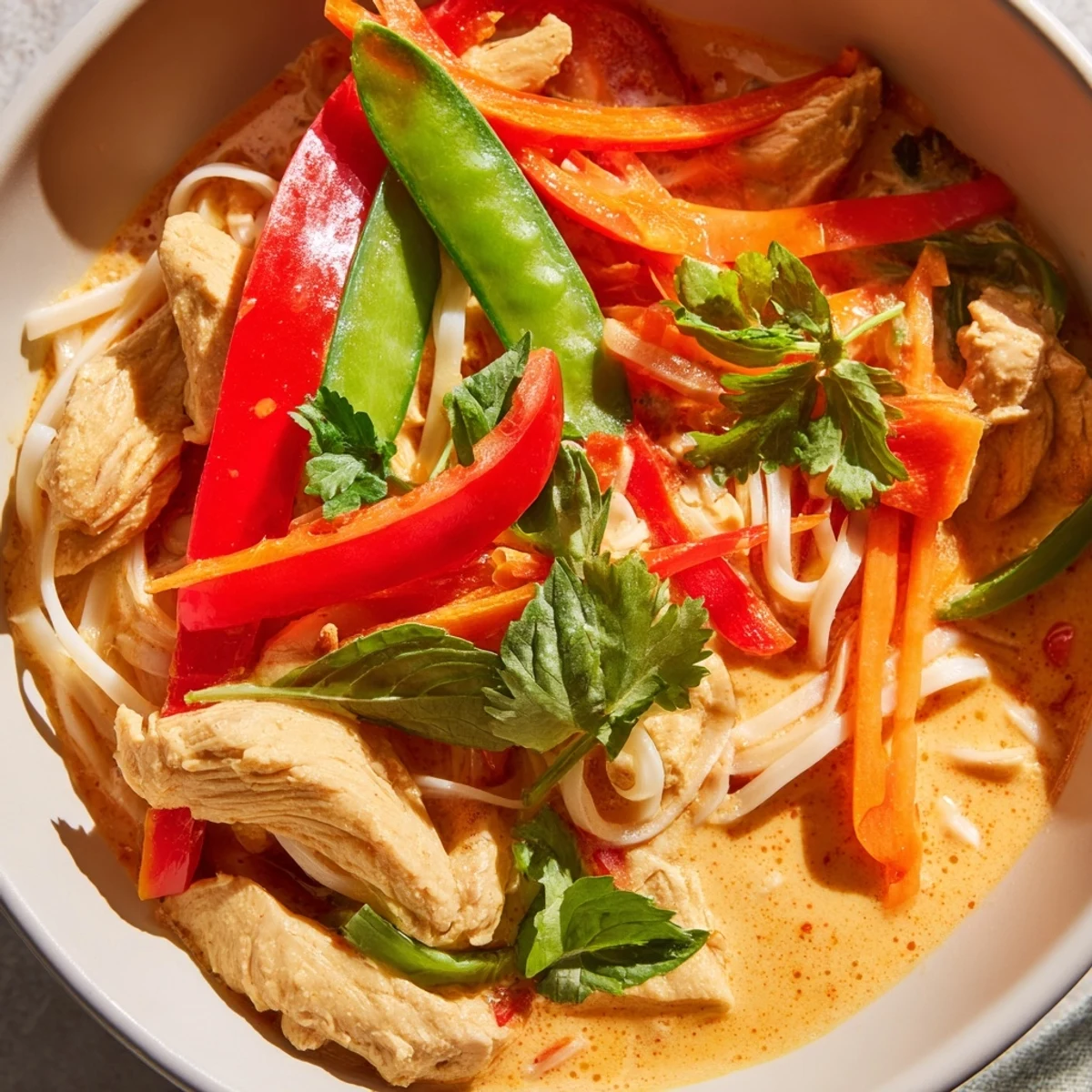
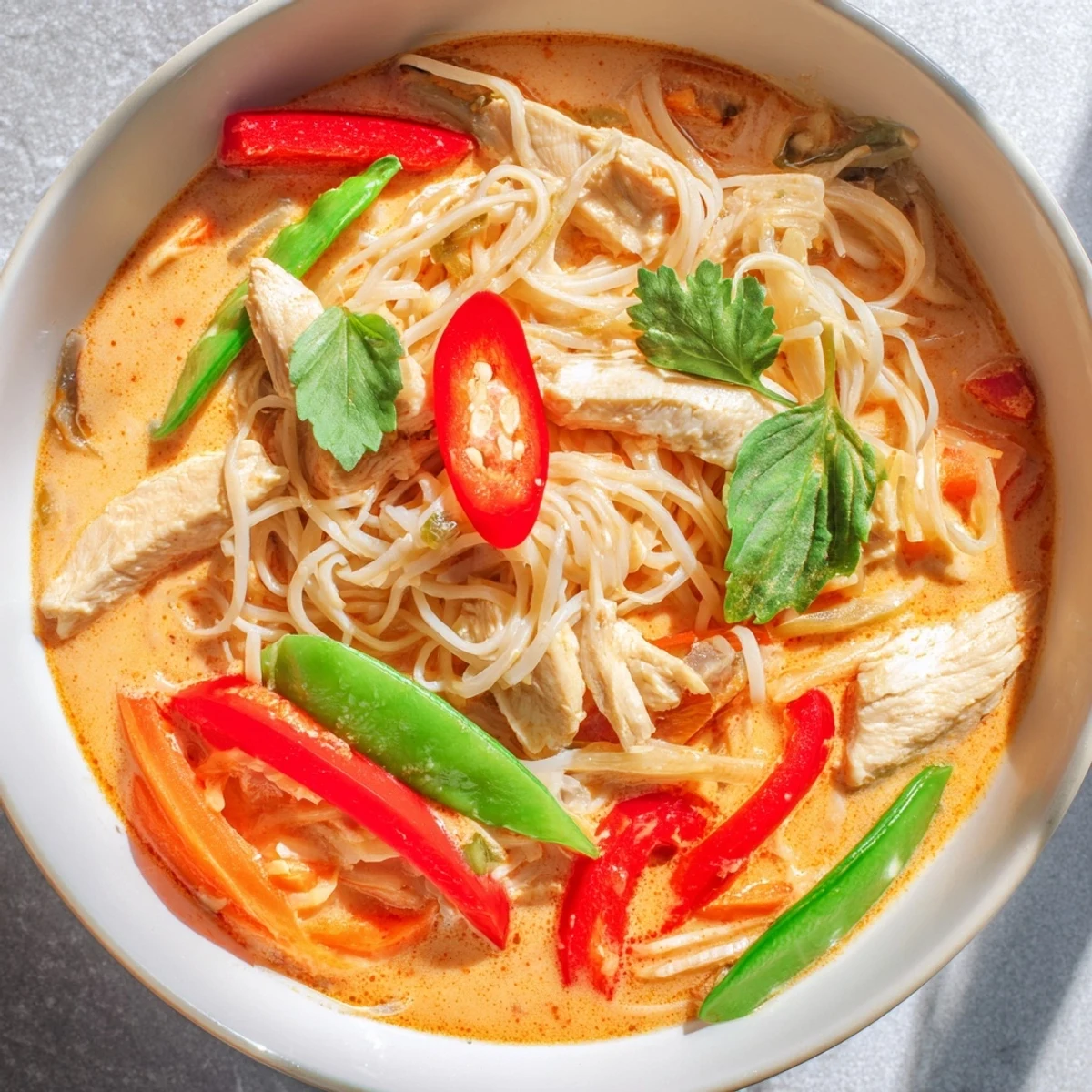
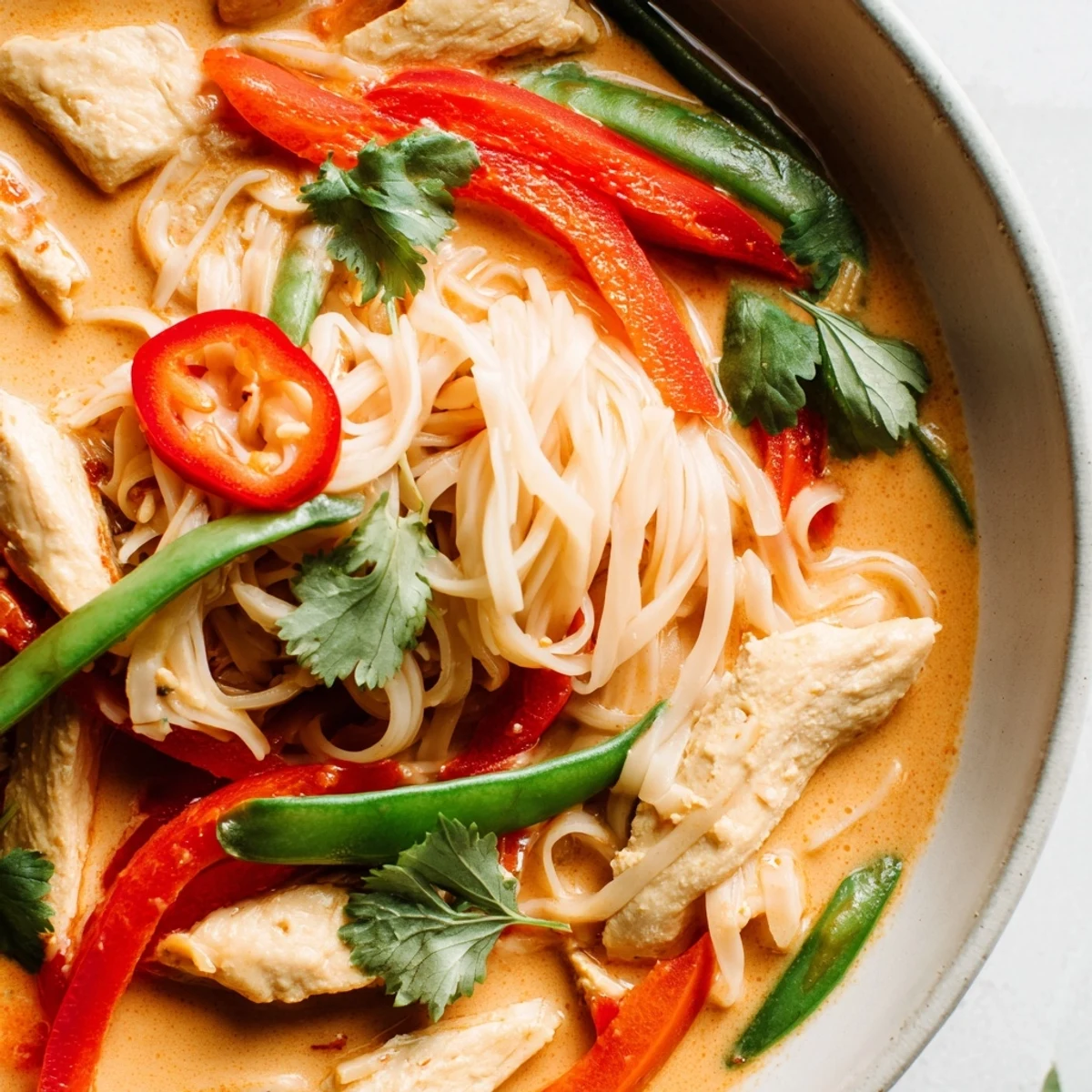
 This dish features tender chicken slices simmered in a fragrant Thai red curry broth enriched with creamy coconut milk and balanced flavors of fish and soy sauce. Medium-width rice noodles soak up the spicy, aromatic sauce alongside crisp bell peppers, carrot, snap peas, and fresh herbs. The dish comes together quickly, with aromatic sautéed garlic, ginger, and curry paste creating a rich base. Lime juice adds a fresh, tangy finish, and optional garnishes like chili and Thai basil enhance the vibrant taste.
I stumbled onto this curry noodle soup on a rainy Bangkok evening when a street vendor near my hotel handed me a steaming bowl and refused to let me leave without tasting it. The first spoonful—that collision of creamy coconut, fiery curry, and fragrant basil—made me forget about the traffic chaos outside. Years later, I recreate that exact moment in my own kitchen, and somehow it always brings that same sense of being wrapped in warmth and flavor.
I made this for my sister during her first week back home after months abroad, and she sat at the kitchen counter just breathing in the steam before taking a single bite. She said it tasted like the places she'd been, and I realized that's what good food does—it's a passport you can eat.
Ingredients
- Chicken breast or thighs (400 g): Thighs stay more tender if your simmer time stretches a bit, but breast is leaner; slice everything thin so it cooks in seconds and stays silky.
- Rice noodles (200 g): Medium-width noodles absorb the broth without dissolving into mush; soak them just until flexible, not fully soft, since they'll cook more in the hot soup.
- Red bell pepper and carrot: Thin slices and matchsticks release their sweetness into the broth while staying crisp enough to have texture.
- Sugar snap peas (100 g): They're the surprise crunch that makes each spoonful interesting; add them near the end so they don't turn to mush.
- Thai red curry paste (2 tablespoons): This is where the soul lives—blooming it in hot oil wakes up every spice inside and keeps your broth from tasting flat.
- Garlic and ginger: Fresh and minced means their flavor spreads evenly through the pot instead of landing in chunks.
- Coconut milk (400 ml) and chicken stock (750 ml): Together they create a broth that's rich without being heavy; full-fat coconut milk doesn't break when simmered.
- Fish sauce, soy sauce, and lime juice: These three are the tuning knob—fish sauce adds umami depth, soy brings salt and body, and lime brightens everything at the very end.
- Fresh cilantro and Thai basil: Basil is essential, not optional; it transforms the soup from delicious to unforgettable in the last moment.
Instructions
- Soak your noodles while you prep:
- Pour hot water over the rice noodles and set a timer—this is your cue to chop vegetables without rushing. They should bend easily but still have a slight resistance when you break one.
- Build your flavor base:
- Heat oil in a large pot over medium heat, then add onion, garlic, and ginger. Listen for them to stop sizzling and start smelling intoxicating—that's when you know you're ready for the next step.
- Wake up the curry paste:
- Stir the curry paste into the aromatics and let it toast for a full minute. You'll notice the color darkens slightly and the aroma shifts from sharp to warm.
- Add the chicken and let it change:
- Toss in your sliced chicken and stir constantly for 2–3 minutes until the edges turn opaque and the meat releases its juices into the pan.
- Create your broth:
- Pour in the coconut milk first, then the chicken stock, stirring so the curry paste dissolves completely rather than clumping. This is easier than you'd think if you're patient.
- Season and simmer gently:
- Add fish sauce, soy sauce, and brown sugar, then bring everything to a gentle boil before turning it down to a simmer. Gentle heat means the chicken stays tender and the flavors marry together rather than fighting.
- Finish the vegetables:
- After 10 minutes, add the bell pepper, carrot, and snap peas; simmer for 5 minutes more so they're cooked through but still have a little snap to them.
- Bring it all together:
- Add your drained noodles and warm them through for 2 minutes in the hot broth, then remove from heat and squeeze in the lime juice. This is the moment the whole bowl comes alive.
- Serve and garnish generously:
- Ladle into bowls and scatter cilantro, Thai basil, and chili slices on top; pass lime wedges at the table so each person can adjust the brightness.
 Pin It
 I learned this soup's real magic one winter when my daughter came home from school frustrated about something, and I handed her a bowl without saying much. She slurped it quietly at the table while I chopped herbs, and by the last spoonful, she was talking again—really talking. That's when I knew this recipe wasn't just about flavor; it was about creating a moment where someone could sit still and feel cared for.
Making This Soup Your Own
The beauty of this curry noodle soup is that it's a template, not a prison. I've made it with shrimp instead of chicken on nights when I wanted something lighter, and I've added mushrooms, baby corn, and bok choy whenever I had them in the fridge. One time I tossed in a handful of spinach and it wilted into the broth so naturally that I've done it that way ever since. The core of the recipe—the curry paste, coconut milk, and lime juice—stays the same, but everything else responds to what you have and what you're hungry for.
Timing and Make-Ahead Options
This soup comes together in about 45 minutes, which is genuinely faster than most takeout if you factor in delivery time. The broth itself actually improves if you make it a day or two ahead and let the flavors settle; just store it without the noodles and basil, then add those fresh when you reheat. I've also realized that if you're meal-prepping, you can have everything chopped and your broth simmered by early evening, then just add noodles and herbs when you're ready to eat.
Spice Level and Substitutions
The amount of curry paste I've suggested lands somewhere in the middle—warm and aromatic without knocking anyone over. If your family prefers milder flavors, use half the paste and add more soy sauce for depth; if you like it fierce, add another tablespoon or even top each bowl with fresh sliced chili. For a vegetarian version, swap the chicken for pressed tofu cubes and use vegetable stock instead of chicken stock, omitting the fish sauce or replacing it with a splash of soy sauce and a pinch of sea salt. The soup becomes lighter this way, which is exactly what some nights call for.
- Reduce curry paste if you're cooking for people who prefer gentle heat, but go slowly—you can always add more spice, never less.
- Fresh basil at the table matters more than anything else in your pantry; dried basil won't give you the same magic.
- If your coconut milk is canned and thick, whisk it gently before pouring so the cream distributes evenly throughout the broth instead of floating on top.
 Pin It
 This soup has become the thing I make when I want to say I'm thinking of someone without having to find the words. It shows up in bowls, steaming and fragrant, and somehow people understand.
Recipe FAQs
- → What type of noodles work best?
-
Medium-width dried rice noodles are ideal as they absorb the flavorful broth without becoming mushy.
- → Can I make this dish vegetarian?
-
Yes, substitute chicken with tofu and use vegetable stock instead of chicken stock. Omit or replace fish sauce with a vegetarian alternative.
- → How can I adjust the spice level?
-
Modify the amount of Thai red curry paste according to your preference to increase or reduce the heat.
- → What fresh herbs enhance the flavors?
-
Cilantro and Thai basil leaves add a fresh, aromatic finish complementing the rich broth and spices.
- → How do I ensure noodles stay tender but not overcooked?
-
Soak noodles until just tender and add them near the end of cooking, warming through for 2 minutes to avoid sogginess.